
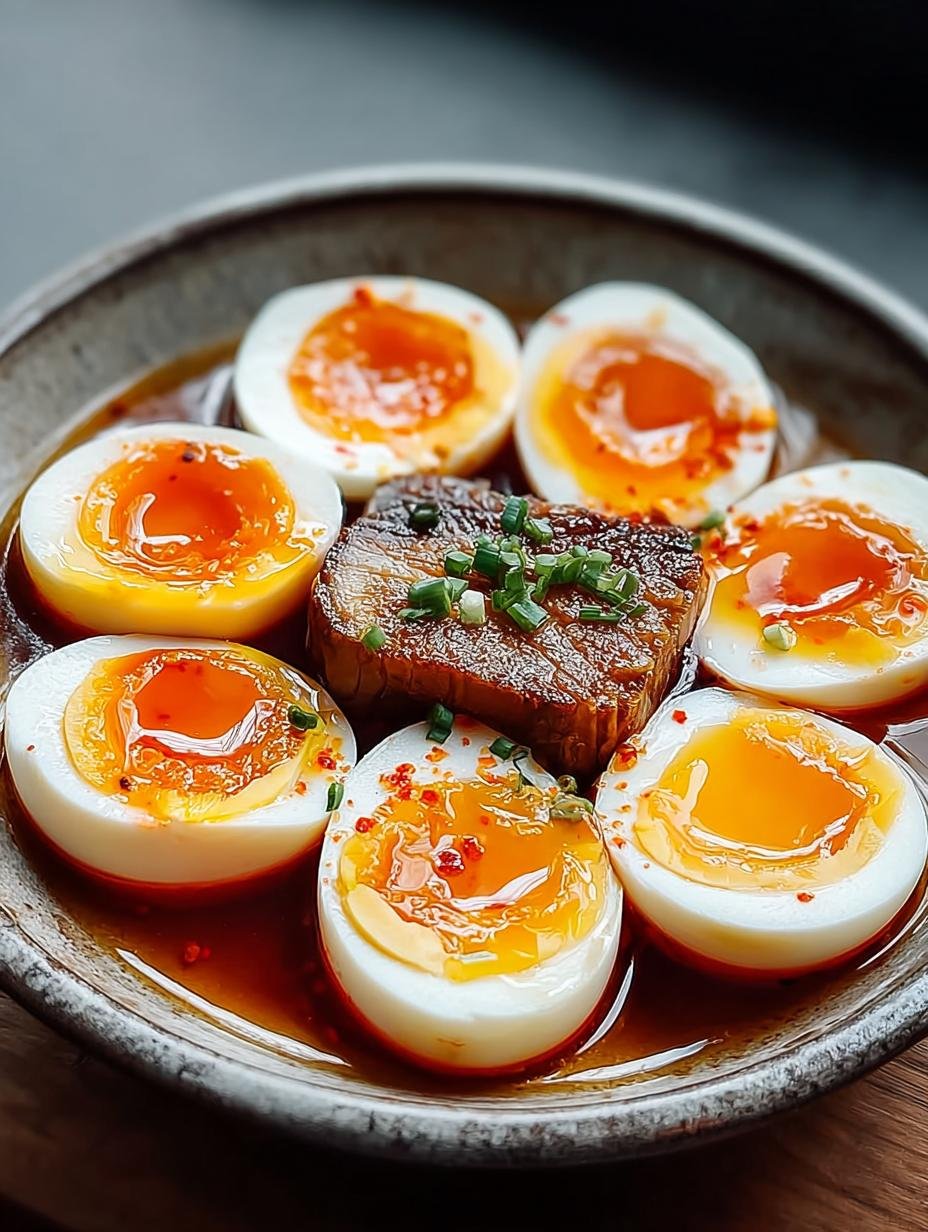
Ramen Egg is a delightful addition to your favorite noodle soup, bringing rich, jammy yolks that elevate the dish to a whole new level. Also known as Ajitama, these eggs deliver an umami punch that can transform an ordinary bowl of ramen into a culinary masterpiece. The process of creating the perfect ramen egg requires just a few simple steps and ingredients, making it accessible even for novice cooks. Let’s dive into the art of crafting these delicious marinated eggs!
Why You’ll Love This Ramen Egg
This ramen egg recipe is not just about flavor; it’s about enhancing your ramen experience. Here are a few reasons to love it:
- Rich, jammy yolks provide a creamy texture.
- Simple ingredients create deep, complex flavors.
- Quick to prepare with minimal cooking time.
- Perfect for meal prep and easy to store.
- Versatile as a topping for salads or rice bowls.
- Authentically captures the essence of Japanese cuisine.
- Can be customized with various marinades for unique flavors.
- Ideal for anyone looking to impress guests with a homemade touch.
This recipe is rooted in traditional Japanese cooking techniques, ensuring that you achieve a perfect ramen egg cooking time for the best results.
Ingredients for Ramen Egg
Gather these items:
- 1 cup Low Sodium Chicken Stock (Substitute with shiitake mushroom stock for a vegetarian option.)
- 1/4 cup Soy Sauce (Use tamari for a gluten-free version.)
- 2 tablespoons Sake (For non-alcoholic option, use a mixture of rice vinegar and water.)
- 1 tablespoon Evaporated Cane Sugar (Brown sugar can be an alternative.)
- 1 tablespoon Ginger (Can be omitted for a milder flavor.)
- 4 large Eggs (Use fresh eggs for better peeling results.)
How to Make Ramen Egg Step-by-Step
- Step 1: Prepare Marinade: In a small saucepan, combine low sodium chicken stock, soy sauce, sake, evaporated cane sugar, and ginger. Heat over medium-high heat until boiling. Simmer for about 2 minutes. Remove from heat and let cool.
- Step 2: Crack Eggs: Tap the bottom of each large egg gently with a spoon to create a small divot. Set aside.
- Step 3: Boil Eggs: Fill a pot with 2 inches of water and bring to a boil. Carefully add prepared eggs, cover, and turn off heat. Set a timer for 5-6 minutes.
- Step 4: Cool Eggs: Transfer eggs to an ice water bath for at least 20 minutes.
- Step 5: Peel Eggs: Crack the eggshells gently and peel away the shells.
- Step 6: Marinate Eggs: Place peeled eggs into a zipper-sealed bag. Pour cooled marinade over eggs, seal, and refrigerate for 8-12 hours.
- Step 7: Store: Transfer eggs to an airtight container if not consumed immediately.
Pro Tips for the Perfect Ramen Egg
Keep these in mind:
- Use fresh eggs for easier peeling.
- Adjust marinade ingredients to taste for a flavored ramen egg.
- For a quicker recipe, marinate for a shorter time.
- Consider experimenting with different ramen egg variations and styles to find your favorite.
- Make sure to cool the eggs completely before marinating for better flavor absorption.

Best Ways to Serve Ramen Egg
Here are some delicious ways to enjoy your ramen eggs:
- Serve over a steaming bowl of ramen for a traditional experience.
- Add to a rice bowl topped with vegetables and protein.
- Incorporate into a salad for added richness and texture.
How to Store and Reheat Ramen Egg
If you have leftover ramen eggs, store them in an airtight container in the refrigerator. They can last for up to a week. For meal prep enthusiasts, these eggs are perfect for adding to various dishes throughout the week. Just remember to keep the marinade on hand to ensure they stay flavorful.
Frequently Asked Questions About Ramen Egg
What’s the secret to perfect Ramen Egg?
The secret lies in the cooking time and marinade. A soft-boiled ramen egg cooked for 5-6 minutes retains its creaminess, while the right marinade enhances the flavor.
Can I make Ramen Egg ahead of time?
Absolutely! These eggs are best when marinated overnight, so they are perfect for meal prep and can be made a day in advance.
How do I avoid common mistakes with Ramen Egg?
To avoid mistakes, make sure to monitor the cooking time closely and ensure the eggs are completely cooled before marinating them for the best results.
Variations of Ramen Egg You Can Try
There are plenty of ways to customize your ramen eggs:
- Try adding miso to the marinade for a unique twist.
- Experiment with different spices for a personalized flavor.
- Use a sweet soy marinade for a different flavor profile.
- Incorporate chili flakes for a spicy kick.
These variations can cater to different dietary needs, including vegetarian options, ensuring that everyone can enjoy the rich taste of a traditional Japanese soft-boiled egg.

For more information on traditional Japanese cooking techniques, check out this Japanese Cooking 101 resource. If you’re interested in meal prep ideas, visit our recipe category for inspiration. You can also learn more about the benefits of eggs in your diet by reading this Healthline article.
Print
Ramen Egg Bliss: Craft Soft-Boiled Umami Heaven
- Total Time: 741 minutes
- Yield: 4 servings 1x
- Diet: Vegetarian
Description
Ramen Eggs, also known as Ajitama, elevate your ramen with rich, jammy yolks, delivering umami goodness in every bite.
Ingredients
- 1 cup Low Sodium Chicken Stock (Substitute with shiitake mushroom stock for a vegetarian option.)
- 1/4 cup Soy Sauce (Use tamari for a gluten-free version.)
- 2 tablespoons Sake (For non-alcoholic option, use a mixture of rice vinegar and water.)
- 1 tablespoon Evaporated Cane Sugar (Brown sugar can be an alternative.)
- 1 tablespoon Ginger (Can be omitted for a milder flavor.)
- 4 large Large Eggs (Use fresh eggs for better peeling results.)
Instructions
- Prepare Marinade: In a small saucepan, combine low sodium chicken stock, soy sauce, sake, evaporated cane sugar, and ginger. Heat over medium-high heat until boiling. Simmer for about 2 minutes. Remove from heat and let cool.
- Crack Eggs: Tap the bottom of each large egg gently with a spoon to create a small divot. Set aside.
- Boil Eggs: Fill a pot with 2 inches of water and bring to a boil. Carefully add prepared eggs, cover, and turn off heat. Set a timer for 5-6 minutes.
- Cool Eggs: Transfer eggs to an ice water bath for at least 20 minutes.
- Peel Eggs: Crack the eggshells gently and peel away the shells.
- Marinate Eggs: Place peeled eggs into a zipper-sealed bag. Pour cooled marinade over eggs, seal, and refrigerate for 8-12 hours.
- Store: Transfer eggs to an airtight container if not consumed immediately.
Notes
- Prep Time: 15 minutes
- Cook Time: 6 minutes
- Category: Side Dish
- Method: Boiling and Marinating
- Cuisine: Japanese
Nutrition
- Serving Size: 1 egg
- Calories: 70 kcal
- Sugar: 1 g
- Sodium: 500 mg
- Fat: 5 g
- Saturated Fat: 1.5 g
- Unsaturated Fat: 3.5 g
- Trans Fat: 0 g
- Carbohydrates: 1 g
- Fiber: 0 g
- Protein: 6 g
- Cholesterol: 186 mg







Leave a Reply